Friday, 27 June 2014

Making Khinkali (ხინკალი)


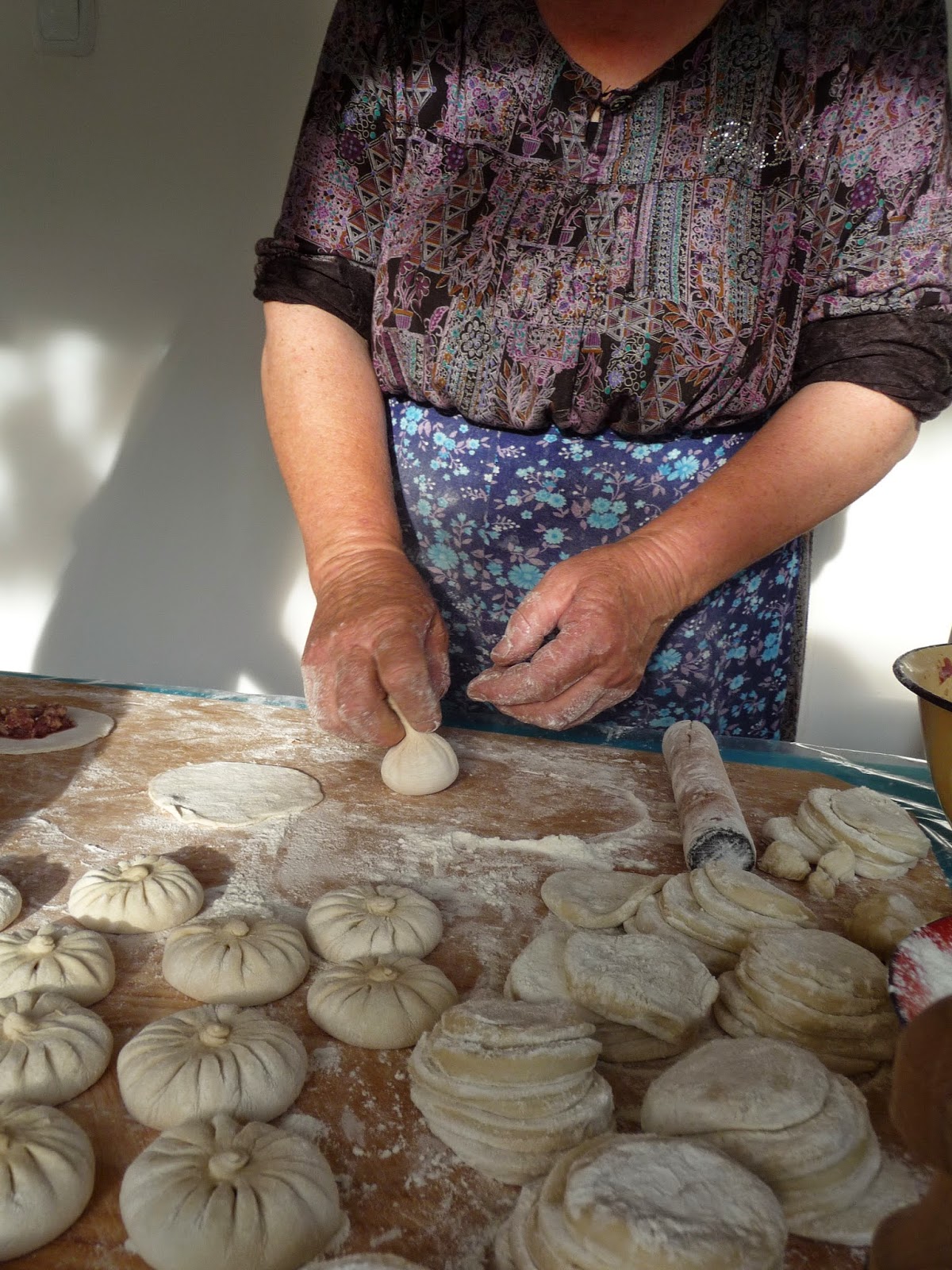
All nations have a national dish and Georgia is no different but trying to find the perfect example of mothers cooking is often akin to seeking the Holy Grail. Here is one such quest satisfied.

There are two national dishes in Georgia. Khachapuri (ხაჭაპური), which is a cheese bread, fried in the pan, the best I've eaten was in Tusheti and made by the women who made the cheese, which was a bit of a head start. Khinkali (ხინკალი) this is a dumpling made of twisted knobs of dough, stuffed with meat and spices. Sounds simple but so is the perfect Yorkshire pudding until you try it. For those of you who have no idea what I'm talking about Yorkshire pudding is a savoury dish. It's batter baked in the oven and eaten with roast beef. Heaven.

On our return to Nazy's from our glorious trip with the shepherds, Nazy's mother promised to make Khinkali for us. The following blog entry is a master class in the art of the perfect Khinkali. I promise you they are exquisite - if you like boiled dumplings. Most Georgians would give their right arm for a meal of these.


.


My feeble attempts were appreciated but I think everyone was just being kind.


Once boiled the Khinkali were taken to the table for a feast fit for kings. You can see the Khachapuri piled up in the foreground cut into fours.
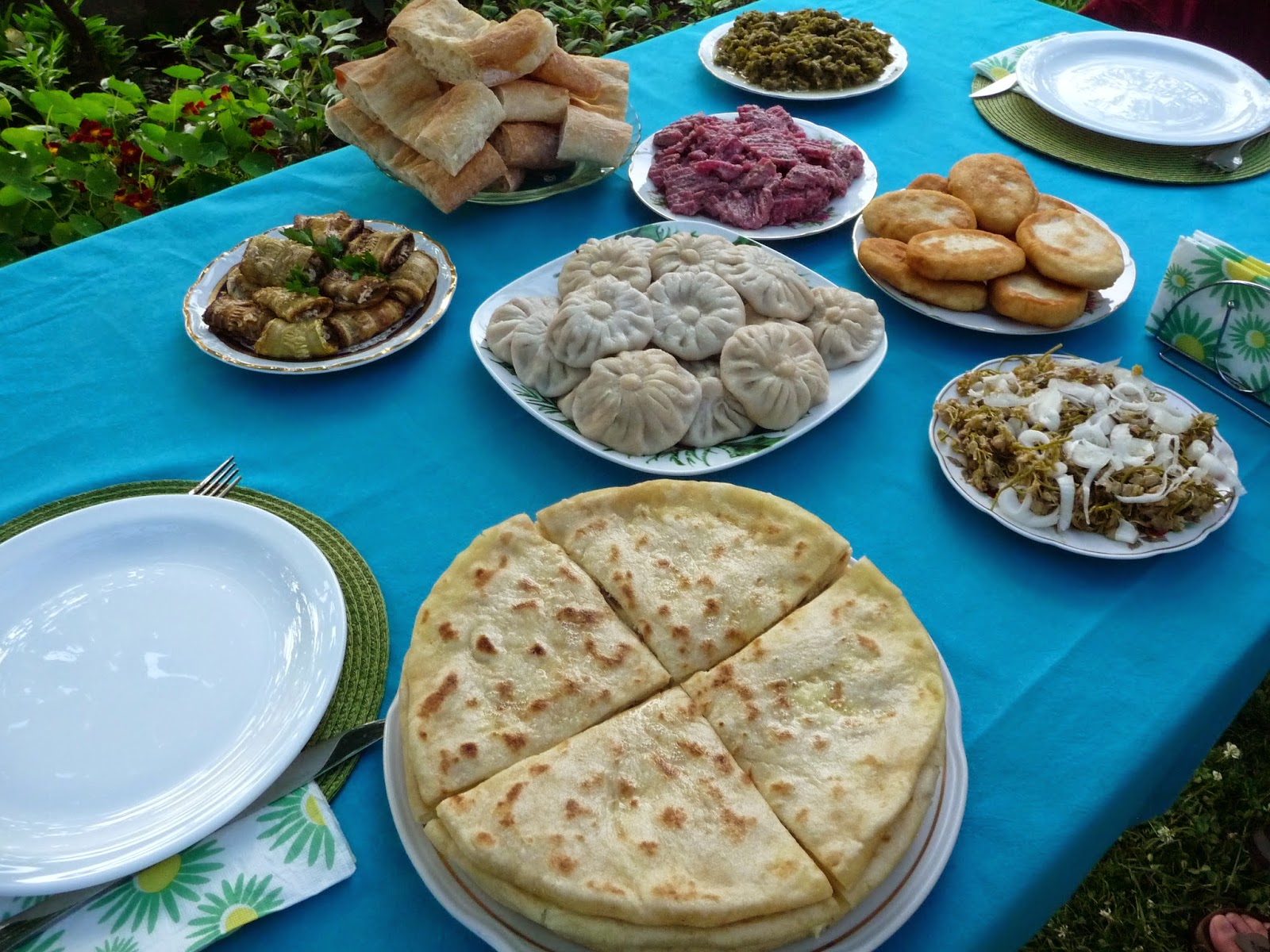

Khinkali is great re-fried  for breakfast with strong coffee


Thursday, 26 June 2014

The craft of making Kvevri (Georgian: ქვევრი) often incorrectly spelled as "Qvevri".


Kvevri are enormous terracotta urns or amphorae buried in the ground and used to store wine while it ferments. In the past I understand these magnificent storage jars were also used for storing grain, butter, cheese, vodka but primarily used for wine making in Georgia. Some wonderful wine is made using Kvevri and I thought  while in Pankisi we would try and find a traditional maker. Nazy, who is teetotal, was kind enough to find the local Kvevri maker, a gentle giant of a man called Zurab Karaulashvili, in Vardisubani Village near Telavi. The following images illustrate this exceptional process of coiling and raising Kvevri. 


Yes this is me standing by typical Kvevri. Once fired they are covered in cement to help strengthen them. Metal straps are also added to help protect them when an earthquake occurs. 


Below is Zurab Karaulashvili outside his workshop which was established in 1881. He was kind enough to take time out of his day to show us the whole process of making kvevri, a very labour-intensive process. Zurab told us he is the only Kvevri maker in this area of Khaketi. In 2014  he was charging 1 lari per litre volume = 2000 lari for a 2000 litre kvevri.


The clay is first dug from the ground 6km away. Sand is collected from the Alazani river bed  11 km away, sieved (through bed springs) and mixed 1:5 with the clay in an electric pugmill.


After the clay comes out of the pugmill, this lady removes the larger stones but retains the small white ones which give the clay its strength. She cuts off big wedges with a curved wire and rolls them by hand into sausage shapes ready for the potter to make the kvevri.


Eight Kvevri are carefully worked in a cool dry shed away from the sunlight. The bases of these kvevri are dug into the ground because the shed roof is so low (notice the pottery props around the base). The clay needs to be kept moist so each coil can be worked in. After adding on several coils, the female assistant shines her torch on the outside of the pot so that the potter sees what he is doing while smoothing the outside with a wooden spatula. As the pots grow in height, they increase the height of wooden planks that the potter walks on around the pots. 8 kvevri take 4-5 cubic metres of clay and 1 cubic metre of sand.


Here are Kvevri at the beginning of the coiling process with the potter Gocha Kbilashvili. This is their new concrete shed with a higher ceiling and more space that will allow them to make more Kvevri at the same time.


Once the Kvevri have been finished, eight of them are wheeled into the kiln to be fired together. The opening is bricked up and a wood fire is lit. Three men watch the kiln for seven days on a rota. They use big logs of wood which Zurab collects himself from a nearby forest with a tractor. He uses different types of timber for each day so that the fire burns hotter towards the end of the firing process. Eight kvevri take eight cubic metres of wood to fire them. The firing temperature is 900 - 1000 degrees centigrade. Zurab told us it takes twenty years practice to get the firing right.

After the kiln cools down, the kvevri are removed and beeswax boiled at 120 degrees Centigrade (to be antiseptic) is washed on the inside walls to seal them. The outsides are also given a protective cement coating.

This strange image of the floor in a cellar in Alvani are the tops of Kvevri ready at some point in the future for the seals to be removed  and wine syphoned out. OK it doesn't look amazing but giant storage jars buried in the ground don't.


Wednesday, 25 June 2014

Felt making in Pankisi


The next village down the road from Jokolo is called Duisi. Duisi is where the main mosques are and the pharmacy is, however the highlight for us was visiting the felt maker Zizi. Her house is at the centre of the village under three massive walnut trees. Felt making is exceptionally hard work and often made by women. The following images show what we saw on a brief unnannounced visit. Remember this is not for tourists but the real deal.


The sheep's wool is carded, boiled and then beaten. More than that I can't tell you.


This lady is making felt hats for grape pickers. A traditional cap which keeps the picker warm when picking grapes at dawn.


Without an interpreter at hand, we managed to communicate with sign language, and were able to purchase two lengths of Zizi's hand made black and white felt to take home with us. I've since made a lens case for my camera with the felt.

Tuesday, 24 June 2014

Water Mill in Jokolo

A few minutes walk from Nazy's house, towards the river is a little gem of a water mill. As the millstones fly around the local maize is ground into a fine flour. These images capture a tradition rapidly vanishing in the Georgian countryside.